The big picture
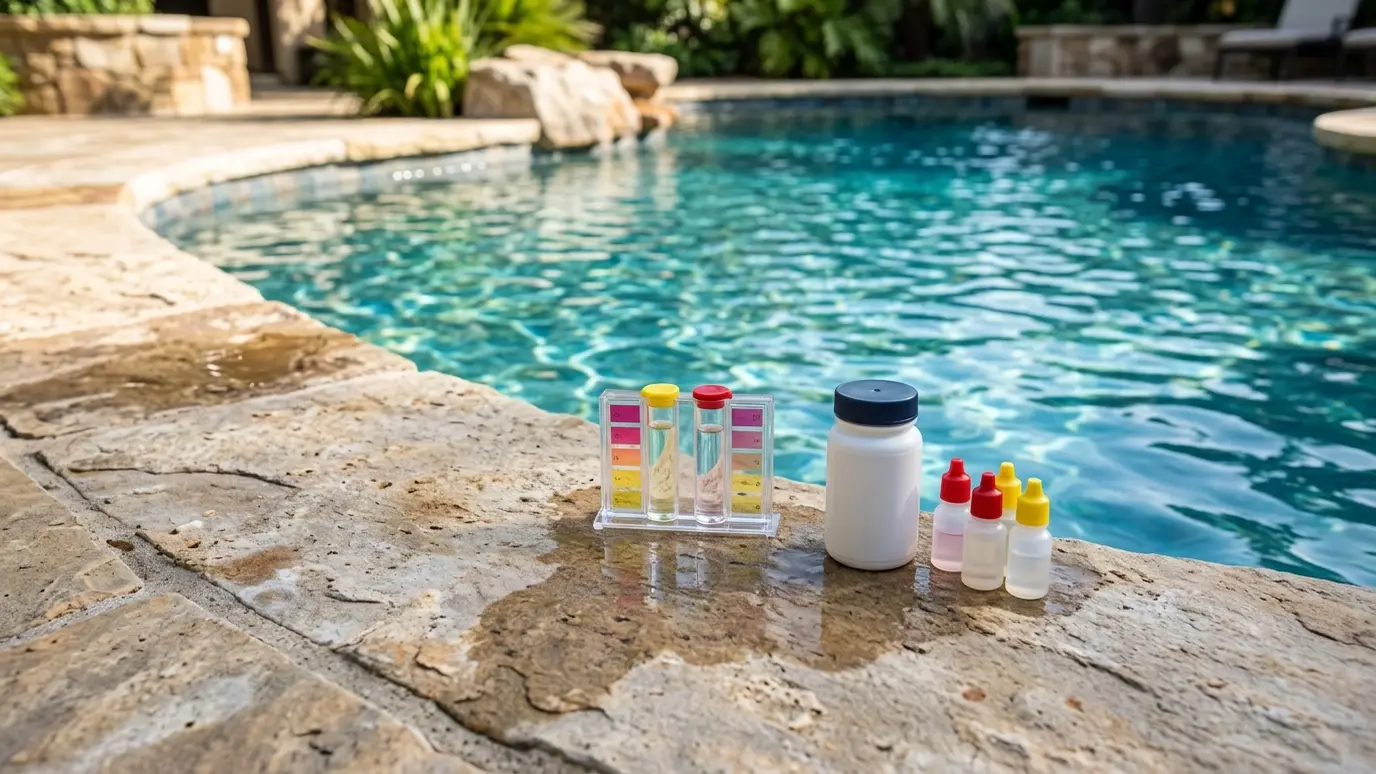
Pool chemistry is a balance. Sanitizer kills germs, pH and alkalinity keep water comfortable and protect surfaces, and calcium and stabilizer protect finishes and chlorine. Test regularly and adjust slowly.
Small changes work better than large ones.
pH
pH measures how acidic or basic the water is. Too low and water can sting and etch surfaces. Too high and water turns cloudy and reduces chlorine strength.
Keep it in the recommended range.
Alkalinity
Alkalinity acts as a buffer that keeps pH steady. Low alkalinity makes pH bounce, and high alkalinity makes pH stubborn.
Adjust alkalinity first, then pH.
Sanitizer and stabilizer
Chlorine or another sanitizer keeps water safe. Stabilizer protects chlorine from sunlight. Too much stabilizer weakens chlorine.
Test both.
Calcium and metals
Calcium hardness protects finishes. Low calcium can etch plaster, and high calcium can cause scale. Metals can stain surfaces and need treatment.
Test for them seasonally.
Habits that help
Run the pump enough, keep baskets and filters clean, brush often and test weekly. Rinse off before swimming. Keep records.
Automation helps with consistency.
Test often, adjust slowly and keep the water balanced rather than chasing problems.